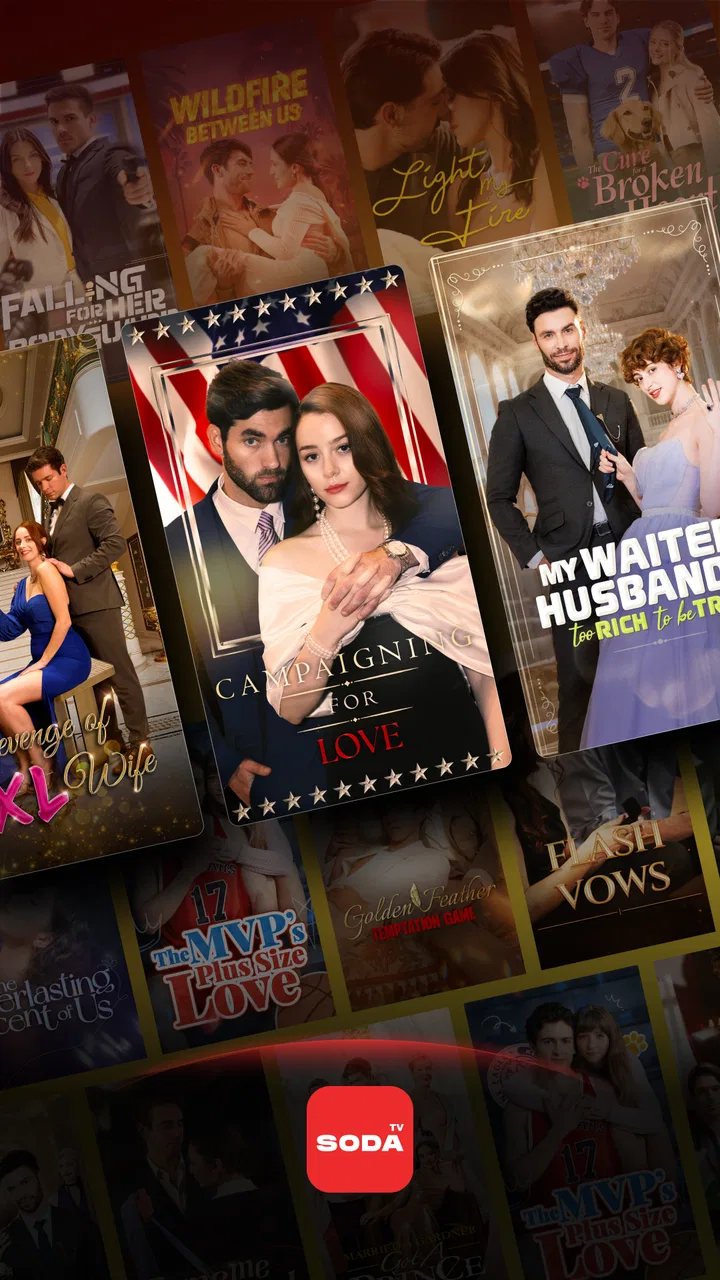
Soda TV: Stream Drama Shorts
- 4.1
- Rating
- 500.00K
- Installs
- Free
- Price

 Analysis by App-foxy
I opened Soda TV expecting a quick way to fill small gaps in the day, and that is exactly where this entertainment app makes the most sense. It is built around short dramas, romance series, and vertical movies, so the experience feels closer to browsing a stream of compact TV scenes than settling down for a traditional film. I found it easy to start, easy to stop, and particularly suited to those moments when I had a few minutes but did not want to commit to a full episode elsewhere.
The app comes from Content Republic Limited and is free to install, although optional purchases range from $0.99 to $129.99 per item. That combination matters: you can explore the service without paying at the door, but you should still approach the viewing experience with a little awareness of how paid access may fit into your routine. The audience rating is Teen, which also makes it worth checking the tone of individual stories before handing the phone to a younger viewer.
How Soda TV fits into everyday viewing
My most natural use for it was during short breaks. Instead of opening a long-form streaming service and spending several minutes deciding what to watch, I could pick a vertical drama and begin almost immediately. The compact format creates a strong “one more part” feeling, especially when a scene ends at a tense moment. It is entertainment designed for repeated, brief visits rather than one carefully planned evening.
You May Also Like

 Blood Strike: 2.5 Anniversary
Blood Strike’s Loadouts Turn Every Drop Into a Tactical Gamble
A close look at Blood Strike’s custom loadouts: how fast access to signature weapons reshapes its battle royale rhythm, rewards preparation, and narrows the gap between fights.

 Pandora - Music & Podcasts
Pandora’s Music Is Easy to Start, but Harder to Recover
Pandora’s strength is its low-effort path from a seed to a station. Its weak spot is how much confidence it asks you to place in connection, setup, and quiet recovery.

 8 Ball Pool
 Is Built on Rivalries, Rematches, and Routine
A close look at the rivalries, rematches, shared routines, and unanswered safety questions that turn a quick pool match into a persistent mobile community.

 Samsung Music
’s Quiet Strength Is Playing What You Already Own
Its reach comes less from spectacle than from dependable access to a personal library. That simplicity is both the app’s strongest retention engine and its ceiling.

 AccuWeather: Weather Radar
AccuWeather Review: A Quick, Clear Forecast for Everyday Decisions
For everyday plans, the best forecast is the one you can understand quickly. AccuWeather makes rain timing, radar, and local conditions easy to act on, with a few trade-offs.

 Hill Climb Racing
Why Hill Climb Racing Still Turns Crashes Into One More Run
A tiny car, a bumpy hill and one more upgrade: Hill Climb Racing keeps resurfacing because its simple chaos makes every near-miss feel personal.
More From Our News Desk



A realistic routine would be watching a few parts while waiting for an appointment, continuing during a lunch break, and then stopping before the next task. That rhythm works better here than trying to watch a whole story in one sitting. The app’s appeal comes from reducing the commitment required to begin. I do not need to remember a complicated plot from a long movie before deciding whether I have enough time.
That convenience also creates the first important trade-off. Short drama is not simply a smaller version of conventional television. Scenes tend to move quickly, emotional turns arrive early, and cliffhangers are part of the structure. If you prefer slow character development, long conversations, or visually expansive cinematography, a standard streaming platform will usually be a better match. Soda TV is strongest when speed and immediacy matter more than a spacious presentation.
The vertical format feels especially comfortable on a phone held normally. I did not need to rotate the device or prepare a larger screen before watching. That makes the app practical on public transport, in a waiting room, or while relaxing with one hand free. On the other hand, the same design is less convincing if your goal is to watch with other people. A television-oriented service remains more suitable for a shared living-room session.
My baseline viewing workflow
I recommend beginning with sampling rather than immediately committing to the first story that catches your eye. Watch enough of a few different dramas to identify which style suits you: romance, heightened conflict, family tension, or a more cinematic vertical movie. The short format makes this comparison relatively painless, because you can learn a lot about the tone before investing much time.
Once I found a story I liked, I treated it as a small serial routine. I watched when I had a genuine break instead of opening the app every time I felt bored. That simple boundary helped me enjoy the cliffhangers without allowing the endless stream of short episodes to take over the day. For this kind of service, the best habit is deciding in advance whether you want a single quick scene or a longer session.
It is also useful to notice how you feel after the first few parts. Some stories are deliberately intense, and their rapid emotional shifts can become tiring if watched continuously. I found that alternating between a dramatic series and something lighter made the app feel less repetitive. This is a practical advantage of using the catalog as a set of small viewing choices rather than treating one title as the only reason to return.
Because the app is free to download, I would use the initial session to understand the viewing flow before considering any purchase. Pay attention to how the story is divided, whether you are comfortable with the pace, and whether the available material matches your expectations. That approach is more sensible than paying simply because a cliffhanger creates immediate curiosity.
Settings and habits worth checking first
There is no need to turn the first launch into a technical project, but I would still spend a moment looking through the app’s available viewing and account controls. The most useful checks are the ones that affect comfort: how you receive interruptions, how you manage your session, and whether the way content is presented suits your screen. Small changes matter more in a short-form app because you may open it many times in a day.
I also recommend checking the purchase flow before becoming deeply invested in a series. Optional in-app items can cost from $0.99 to $129.99, so the price range is broad enough to deserve attention rather than casual tapping. I would keep purchase confirmation enabled on the device and make sure anyone else using the phone understands that the app is free to install but may offer paid items. This is not a criticism of the service; it is a sensible safeguard for any entertainment app with optional spending.
Notifications deserve the same thought. A reminder can be helpful when you intentionally follow a story, but frequent prompts can turn a relaxing break into a constant invitation to return. I prefer allowing only the alerts that genuinely help me continue a series. If you are trying to reduce screen time, leaving every notification active works against that goal, particularly when the content is built around cliffhangers.
The Teen content rating is another setting-related consideration, even though it is not a control you can simply adjust to suit every household. Parents should treat it as a signal to preview stories and supervise use when appropriate. Romance and dramatic conflict can vary in tone, and a short format may move into mature themes more quickly than a younger viewer expects.
Performance is best judged in the places where you actually watch. I would test the app on both a strong home connection and the mobile connection you normally use outside. Short-form video encourages frequent starts and stops, so an unstable connection can feel more annoying than it would during one long, buffered program. If the experience becomes frustrating away from home, I would reserve Soda TV for reliable connections rather than assume it will replace every other viewing option.
Faster patterns for finding something worth watching
The quickest way to avoid wasting time is to separate discovery from commitment. On a first visit, I would browse broadly and sample several titles. On later visits, I would return to the story that already proved its appeal instead of repeatedly scanning the entire catalog. This two-step habit makes the app feel more like a personal queue, even if you are simply remembering a few titles that caught your attention.
Another useful pattern is matching the story length to the break you have available. If I only have a few minutes, I choose one compact installment and stop deliberately. If I have a longer window, I start only when I am willing to continue through a few connected parts. This prevents the common mistake of beginning a tense scene just before a meeting or an appointment.
I found that watching with the phone held in the same comfortable position made the vertical presentation more pleasant. It sounds minor, but repeatedly changing orientation or gripping the device awkwardly can make short sessions feel more tiring. A stand or a stable resting place can help during a longer run, while handheld viewing remains ideal for quick visits.
For romance series, I would keep expectations focused on momentum rather than realism. These stories often work because they establish attraction, conflict, and reversal quickly. If I wanted subtle dialogue or a slow relationship arc, I would switch to a conventional series. If I wanted an immediate emotional hook before going back to my day, Soda TV’s compact structure served that purpose well.
The same principle applies to vertical movies. They are convenient when I want a complete-feeling story without reserving a large block of time, but the phone screen and compressed presentation naturally limit the sense of scale. I would choose them for personal viewing and portability, not as a replacement for a cinema night or a carefully produced home-theater experience.
One of the better ways to use the service is to create a stopping rule before opening it. For example, I might decide to watch one installment during a coffee break or stop after reaching a natural pause. Without that rule, cliffhangers can make the session expand unexpectedly. The app is enjoyable precisely because it removes friction, and that same strength means I need to supply my own limit.
Where the short-drama design reaches its limits
The biggest limitation is not a broken feature; it is the format itself. Vertical storytelling has to communicate quickly, and that can make scenes feel compressed. Characters may be introduced through strong signals rather than gradual development, while plot turns can arrive before I have had time to absorb the previous one. Viewers who enjoy fast melodrama will see this as energy. Viewers who want nuance may experience it as rushed.
There is also a meaningful difference between “free to start” and “free for every part of the experience.” Since the app includes optional purchases, I would not assume that every story can be completed without spending. The sensible approach is to enjoy the freely available material, understand where purchasing enters the experience, and decide whether a particular series deserves that commitment. I would never recommend buying impulsively just to resolve a cliffhanger.
The broad purchase range makes budgeting especially important. A small occasional purchase and a much larger item are very different decisions, even though both appear within the same app. I would treat each purchase as a separate entertainment choice, not as a reason to keep spending because I have already invested time in a story. That mindset protects the value of the free entry point.
Some viewers may also miss the depth of the usual alternatives. Large streaming services often provide longer episodes, broader device support, and a more established living-room experience. Social video platforms may offer even faster discovery and a wider mix of casual clips. Soda TV occupies a narrower space: scripted, emotionally direct, mobile-first stories that are easier to consume than traditional television but more structured than random short videos.
That narrower focus is useful when I know what mood I want. It is less useful when I want documentaries, live events, comedy clips, or a broad family catalog in one place. I would skip Soda TV if my main goal were a universal entertainment hub. I would also look elsewhere if I strongly dislike romance-driven plots, dramatic cliffhangers, or watching on a phone.
Device compatibility is straightforward at the baseline, with support for Android 7.0 and later. That makes the app accessible on older Android phones, but the quality of the experience will still depend on the screen, connection, and general performance of the device. A smaller or slower phone may make rapid browsing and video playback less comfortable than a newer model. I would judge it by actual viewing comfort rather than by operating-system support alone.
Who will get the most from Soda TV
I think the app is a good fit for people who enjoy romance and dramatic fiction but rarely have time for a full episode. It also suits commuters, students between classes, and anyone who prefers phone-first entertainment. The short installments create a clear advantage for irregular schedules: you can return to a story without needing to protect an entire evening.
It is also useful for viewers who like testing new stories quickly. Because the format gets to its premise fast, I could reject a title without feeling that I had wasted a long investment. That makes the service a practical discovery tool for a particular kind of drama, especially when I am in the mood for heightened emotion rather than careful realism.
I would be more cautious recommending it to families sharing one device, people with strict spending limits, and viewers who expect every title to be suitable for children. The Teen rating should be taken seriously, and the presence of optional purchases means that account and device controls matter. It is also not the right choice for someone who wants a polished large-screen experience with long-form storytelling.
The app’s average rating is 4.1 from around 5.7 thousand ratings, with more than 500 thousand installs. I read those figures as evidence of a real audience rather than proof that every viewer will love the format. The numbers suggest that the concept has found traction, but personal taste matters more here than popularity because short vertical drama is a very specific viewing style.
What I noticed about the current app experience
At version 1.3.5, Soda TV feels like a focused entertainment product rather than an attempt to cover every type of video. That focus helps the central idea stay clear: open the app, find a compact scripted story, and continue whenever you have a spare moment. I appreciate that clarity because it makes the service easy to explain and easy to test.
At the same time, a focused catalog can feel limiting after the novelty fades. If I use it every day, I need enough variety in tone and story structure to avoid feeling that each title follows the same emotional rhythm. My solution is to treat it as one part of my entertainment rotation, not as the only video app on the phone.
I would also avoid judging a series solely by its opening scene. Short dramas often use an exaggerated hook to earn attention, and the early tone may not represent the entire story. Sampling more than one installment gives a fairer impression of whether the characters and pacing work for me. This is a small but important difference between casual scrolling and deliberate viewing.
The service is best when I accept its rules. I need to be comfortable with vertical framing, quick escalation, episodic suspense, and the possibility of paid items. Once those conditions are clear, the app becomes easy to use. If I fight the format by expecting a conventional movie experience, the limitations become much more obvious.
My verdict after building a repeatable routine
I recommend Soda TV as a free starting point for viewers who want scripted entertainment in small, phone-friendly portions. My strongest advice is to use it intentionally: sample several stories, adjust notifications and purchase safeguards, choose sessions that fit your available time, and set a stopping point before a cliffhanger decides for you. Those habits make the experience more enjoyable and keep the free-to-start model predictable.
For me, the app succeeds because it understands a specific moment in modern viewing: I want a story now, but I may only have a short break. Its romance series, short dramas, and vertical movies answer that need more directly than a traditional streaming catalog. The trade-off is that the stories can feel compressed, the phone is the natural screen, and optional purchases require attention.
Content Republic Limited has shaped Soda TV for a Teen audience that enjoys fast-moving fiction and frequent returns. I would choose it over a standard service when I want an immediate emotional hook, and I would choose a conventional streaming platform when I want depth, scale, or a shared-screen experience. The best reason to install it is not that it replaces television, but that it makes a very different kind of viewing remarkably easy to fit into the day.
After trying it as part of a repeatable routine, I see it as a useful companion app rather than a complete entertainment replacement. Install it if short romance and drama are genuinely your thing, keep spending controls in place, and give the vertical format a fair trial. If you prefer slow-burn storytelling or want one service for every kind of video, you will probably be happier elsewhere.
FAQs for Soda TV: Stream Drama Shorts
01What is Soda TV: Stream Drama Shorts?
Soda TV: Stream Drama Shorts is a mobile entertainment app focused on short-form dramatic stories designed for quick viewing sessions. Episodes are usually presented in a vertical, mobile-friendly format, making them easy to watch during a commute or break. The app may include romance, suspense, family conflict, and other serialized storylines, with new episodes or titles depending on your region and the current catalog.
02Is Soda TV: Stream Drama Shorts free to download and use?
The app can generally be downloaded without an upfront charge, but free access may be limited. Some episodes, series, or viewing features can require in-app purchases, virtual coins, a subscription, or watching advertisements. Before starting a series, check the pricing information shown inside the app and review the renewal terms carefully, especially if you activate a recurring subscription through Google Play or the App Store.
03Does Soda TV require an internet connection?
Yes, Soda TV is primarily a streaming service, so an active internet connection is normally required to load and play its drama shorts. A stable Wi-Fi or mobile-data connection provides a smoother experience and reduces buffering. Availability of offline downloads, if offered for particular content or account types, can vary by device, location, and app version, so users should confirm this within the app.
04What kind of content is available on Soda TV, and is it suitable for children?
The catalog is centered on short dramatic fiction and may include mature themes such as romance, relationship conflicts, betrayal, crime, emotional distress, or suggestive situations. Content ratings and descriptions should be checked before watching, because suitability can differ from one series to another. Parents should also review the app’s age rating, enable device-level purchase controls, and supervise younger viewers when necessary.
05What should I know about privacy, permissions, and subscriptions before installing Soda TV?
Before installing Soda TV, review its Google Play or App Store listing, privacy policy, and requested permissions. Streaming apps may collect information related to account details, device identifiers, usage activity, and payment transactions, depending on how the service operates. If you subscribe, remember that deleting the app usually does not cancel billing; subscriptions must be managed through your platform’s account settings.
Pros
- Short episodes are easy to watch during quick breaks.
- The app offers a steady stream of bite-sized drama content.
- Vertical videos are well suited to one-handed mobile viewing.
- Stories often use cliffhangers to keep viewers watching.
- Simple navigation makes browsing new series straightforward.
Cons
- Many episodes are very brief
- requiring frequent taps to continue.
- Some content may be locked behind coins or paid purchases.
- Dramatic plots can feel repetitive across different series.
- Video availability and features may vary by region.
- Frequent notifications could become distracting for some users.

Soda TV: Stream Drama Shorts
Gallery